
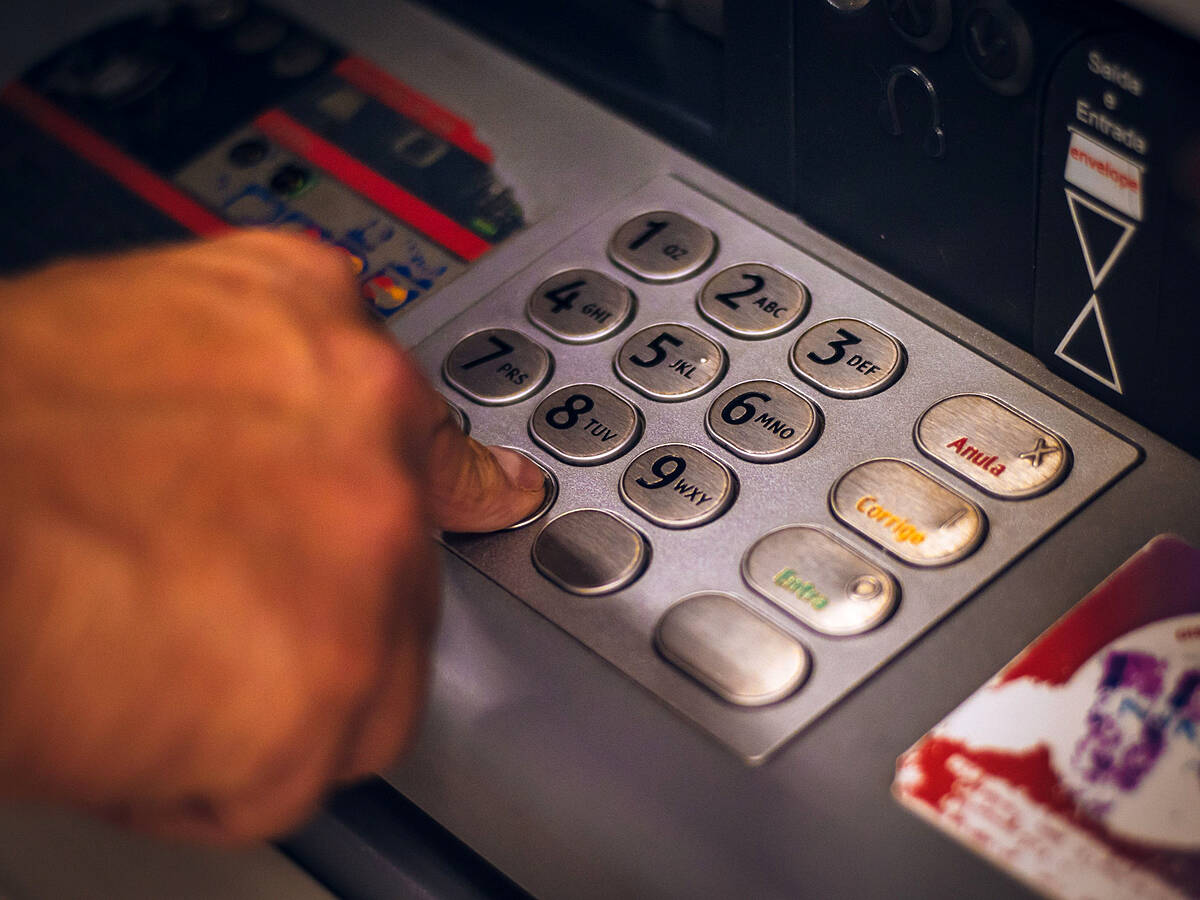

ATMs Abroad
ATMs are almost everywhere worldwide, and you can usually withdraw cash with at least Visa and Mastercard. Withdrawing local currency at your destination is often safer than carrying the same amount in cash. That said, the need for money has steadily decreased, so in safe destinations it is advisable to pay directly by card in shops and restaurants, which keeps cash needs low.
ATMs usually operate in the local language and at least in English. In a surprising number of places, the machine even supports Finnish after recognising a Finnish card.
You can withdraw cash from almost any ATM you come across, but it is worth spending a few minutes choosing the best machine. Fees vary widely, and the wrong choice can add high costs. Pick an ATM in a spot where withdrawing feels safe. In other words, avoid dark alleys.
Withdrawal Fees
ATM withdrawals are rarely completely free, though it is possible. Fees can be charged in several ways.
ATM Usage Fees
A notable number of ATMs charge a fee at the time of withdrawal. The fee is usually a few euros and is charged to your card immediately. We have also encountered ATMs with unreasonably high withdrawal fees.
In many places, there are ATMs with no service fee at all or a very low one. Therefore, before your first withdrawal, try a few different operators’ ATMs to find the lowest service fee or even a free machine.
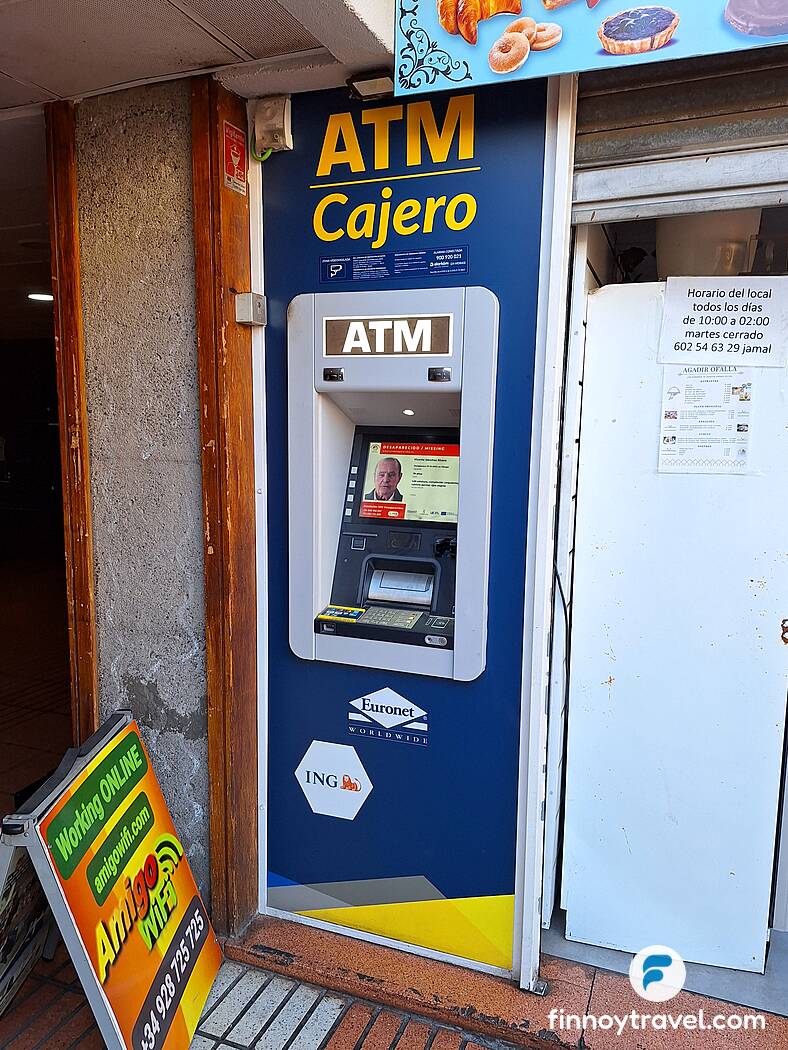
The fee may be fixed, percentage-based, or a combination of both.
Card Issuer Fees
Your card issuer may charge a withdrawal fee in addition to the ATM’s own service fee. With debit cards, withdrawals from your own account are often free up to a few times a month, after which the issuing bank charges a fee. Some cards have no free withdrawals, so a fee applies to the very first transaction. If you withdraw from the credit line, charges may start accruing from the first withdrawal onward.
Currency Conversions
When you withdraw a foreign currency, you pay a conversion fee. ATMs often offer to perform the conversion immediately, but that uses the ATM’s own, often very poor, exchange rate. You should rarely accept the ATM’s proposed conversion; instead, allow the charge to be processed in the local currency. Then your card issuer handles the conversion, and the fee is about 1–2 per cent of the withdrawal amount.
With the free Curve Pay Card, the currency conversion fee is exceptionally low.
Interest
When you withdraw cash on a credit card, you pay interest in addition to any withdrawal fee. You typically pay expensive interest on the withdrawn amount from the withdrawal date until the bill is paid. Therefore, avoid using credit cards for cash withdrawals, but they are good for in-store payments because they offer about 30 days of interest-free time. The Bank Norwegian Visa Card is an exception, as Bank Norwegian does not charge a withdrawal fee or interest on cash advances as long as you pay the bill by the due date.
Cash Withdrawal Safety
ATM withdrawals themselves are very safe. The biggest risk is being robbed during or after the transaction. For this reason, withdraw only in daylight in places with plenty of people. For example, shopping malls are good locations. Put the cash in your wallet or bag before leaving the machine. Please do not keep your wallet in a pocket where it can be taken without you noticing.
Failed Withdrawals
Sometimes withdrawals fail due to a technical issue. This happens abroad surprisingly often. Typically, the machine returns your card, prints an error receipt, and the matter is resolved. Occasionally, however, the ATM claims it dispensed the cash when it did not. The charge will also appear on your account.
Incorrect charges often reverse on their own within a few days. If not, file a claim with your card issuer right away; they will refund the money after investigating the chain of events. The investigation may take months, but in many cases, the funds are returned immediately, even while the process is ongoing.
For example, we made a cash withdrawal at Dubai Airport with a Bank Norwegian Visa Card. We never received the money, yet the card was charged. After our claim, Bank Norwegian refunded the money within a few days, even though their investigation took longer.
Read the review of the Saldo Bank Visa Card.
Is Carrying Cash Cheaper?
Carrying cash from Finland to your destination can be cheaper, especially when travelling within the euro area. In the euro area, currency does not need to be exchanged at the destination. However, carrying large amounts of cash is not safe, as it can be lost accidentally. Accepting the small extra costs from withdrawals for safety is often sensible. In the euro area, paying by card in shops usually does not incur additional fees, so card payment is the best and safest method in reputable businesses.
On long-haul trips, exchanging currency in Finland is not worthwhile due to poor rates. The options are to bring euros and exchange them at the destination, use on-site card payments, or withdraw local currency from an ATM. The cheapest option is likely to be exchanging cash for local currency at a bureau that offers a reasonable rate.
However, currency exchange abroad carries risks: not all exchange offices operate honestly. For this reason, card payments may also be the best option for long-haul trips, provided you ensure your card details are not captured during payment. Using ATMs at distant destinations is relatively safe, but currency conversion fees can be high.
Tips for Cheap Cash Withdrawals
The Right Card
Withdraw cash with a card that does not charge a withdrawal fee, such as Bank Norwegian Visa, Curve Pay, or Revolut
.The Right ATM
Choose the cheapest ATM. It is unlikely to be the first one you see in a tourist area; instead, look in areas frequented by locals. The best ATMs do not charge for withdrawals.
Use the Card Issuer's Exchange Rate
Let your card issuer handle the currency conversion—decline the ATM’s conversion offer. Favour cards that use excellent exchange rates. These include Curve Pay and Revolut.
Withdraw Enough at Once
Many ATMs charge a fixed withdrawal fee, making small withdrawals relatively more expensive. Try to withdraw no more than twice during the trip so the number of withdrawals—and therefore the total fees—does not grow unnecessarily.
Pay by Card
Paying directly by card in shops and restaurants is usually convenient and safe. Avoid merchants you do not trust. Alternatively, you can use a Revolut Card on the trip, which you must top up before paying. That's why the card automatically sets a safety limit equal to your balance.
Bottom Line
There is no need to fear using ATMs abroad. They often work in English and sometimes even in Finnish. Although withdrawals sometimes fail, you are unlikely to lose your money. The biggest risk is being robbed if you withdraw in an unsafe place.
Before withdrawing, it is important to determine which of your cards is cheapest to use. Then choose an ATM with the lowest fees. Finally, at the machine, make the right choices so you do not accidentally use the ATM’s expensive exchange rate.
Use cash only as much as necessary. In large, trustworthy businesses, paying directly by card is often cheaper and more convenient. Use cash only for small purchases when card payment is not possible or safe.