
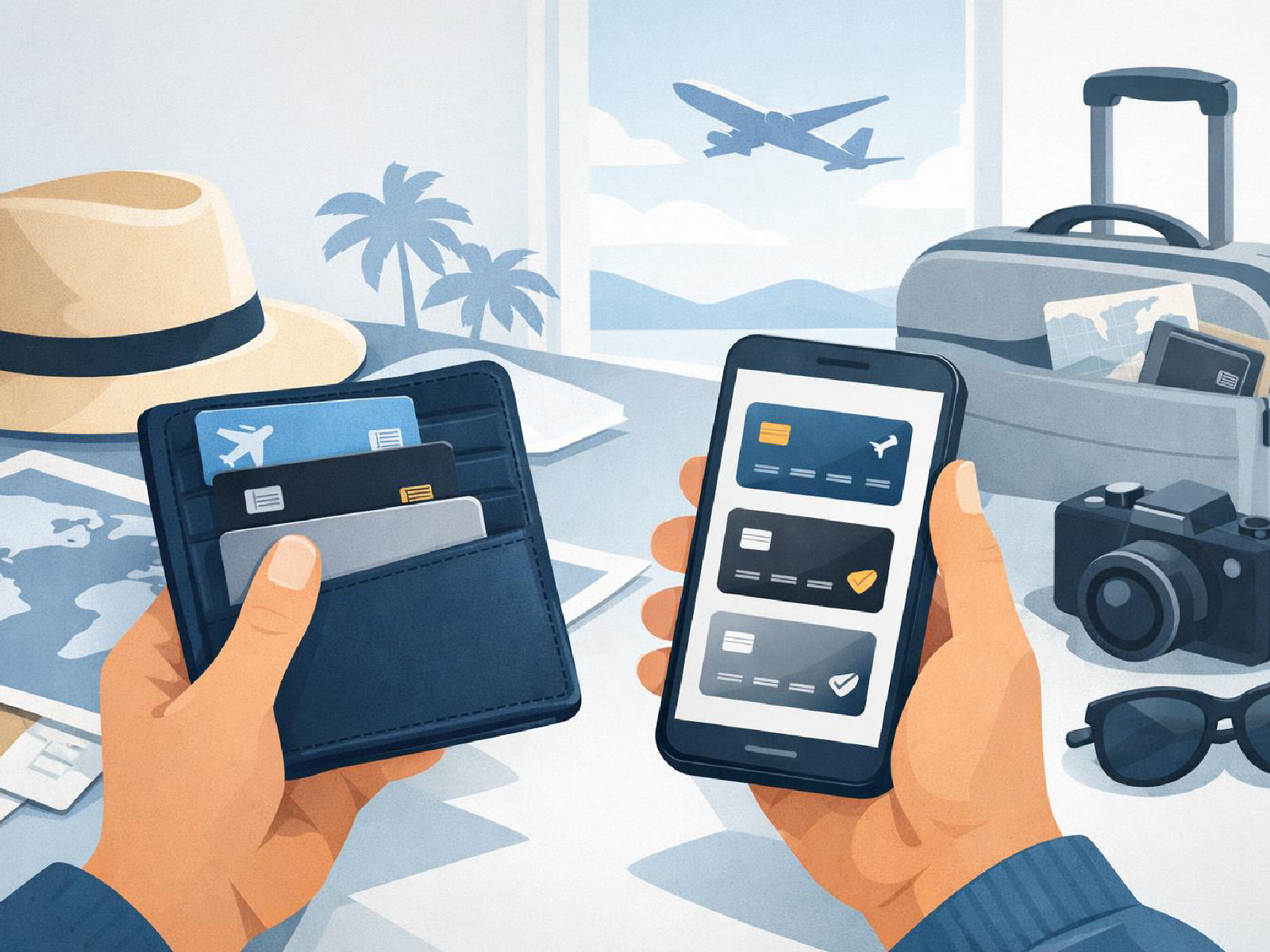
Why is a Credit Card Useful When Travelling?
You can plan and complete a domestic or international trip from start to finish without a credit card, but without a payment card, many simple things become difficult. A payment card is often needed already for booking flights and hotels. Although flights and hotels can be paid directly from your bank account, the right payment card makes bookings easier and adds extra protection.
If an airline or hotel booking service goes bankrupt, the consumer is vulnerable unless the trip was paid for with a charge or credit card that offers sufficient protection. A regular debait card typically provides no protection. For example, we encountered a situation in which an airline went bankrupt before the travel date. Fortunately, the flight was paid for with a Visa charge card, and Visa refunded the full amount after a simple claim. The internet also has a significant number of less reliable online travel agencies, making card payment the safest option.
A credit card that offers a grace period is handy while travelling. If you are not on a package tour, hotels usually require a deposit, which is charged to your card. You can pay the deposit in cash or by debit card directly from your account, but it is most convenient to pay with a credit card. A credit card is also usually required when renting a car or using other services with higher risk.
A payment card is also convenient for everyday needs on the road because you do not have to carry large amounts of cash. If the urge to shop strikes, you can pay for larger purchases with your card. In short, a credit or debit card is almost essential when travelling, though you can get by without one. The payment card does not have to be a true credit card; often, a debit card or a charge card serves the same purpose. With debit cards, temporary expenses appear immediately as pending authorisations, whereas with charge and credit cards, they are processed immediately.
In this article, we focus mainly on credit cards, but many routine tasks can also be handled with a debit card. Many card perks, such as bankruptcy protection, do not apply when paying with a debit card. For this reason, we analyse in particular which is the best credit card for travel.
Card Types
There are different kinds of payment cards. It is good to understand the features of each type before applying.
When paying with a debit card, the payment almost always comes directly from your bank account. Your account must have enough funds to cover the purchase. Usually, the exact amount of the purchase is placed on hold during the transaction, and the actual charge is posted a few days later.
When paying with a credit card, the payment is not taken from your account immediately; instead, you receive a bill later. Credit cards are divided into charge cards and revolving credit cards. With a charge card, purchases must be paid by the statement due date, usually about 30 days after the purchase. In that case, there are no interest costs, but some issuers charge an account handling fee.
In addition to a grace period, a revolving credit card also provides credit, meaning you do not have to pay the full balance by the due date. However, you must pay high interest on any unpaid portion, so using it is rarely justified. People commonly call all credit cards “credit cards,” even though not all of them actually offer revolving credit.
Credit Card – Free When Used Wisely
Many credit cards with revolving credit are completely free when used correctly. Of course, you must pay for your purchases, but nothing extra.
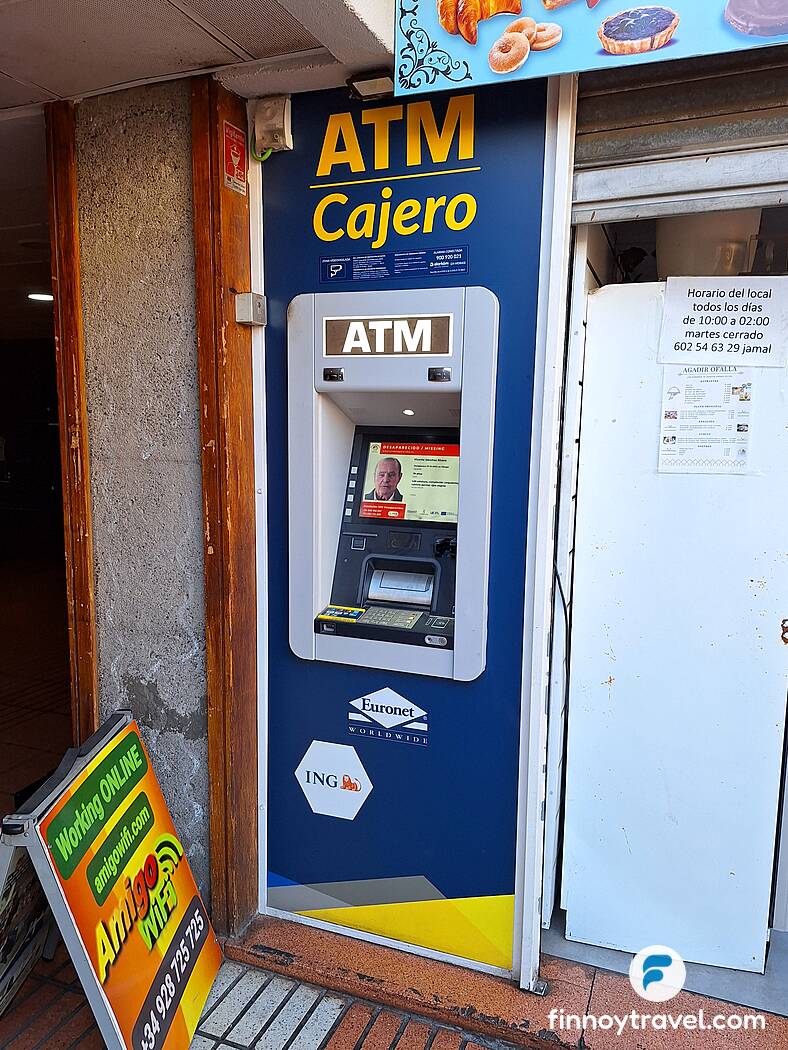
Free-of-charge use requires that the card has no annual or monthly fees. You must pay the statement in full no later than the due date so that no interest accrues. Be especially careful with ATM withdrawals: some cards have high withdrawal fees, while others offer fee-free withdrawals. Even if card issuers offer fee-free ATM withdrawals, many ATMs directly charge a service fee, which you cannot avoid.
If used carelessly, a credit card becomes expensive. Annual fees can be high, and if you do not pay by the due date, interest costs can be substantial. There may also be fees for ATM withdrawals and currency conversion surcharges.
It is essential to study the market carefully when choosing a credit card. Getting a credit card requires sound financial management, and you should not even apply if you are not confident you can use it responsibly. Often, a negative credit record prevents you from getting a credit card.
Credit Card Perks
Credit cards often include a bundle of free or paid extras for travellers. The best known are travel insurance and airport lounge benefits.
Lounge Access
Many credit cards entice travellers with free or discounted access to airport lounges. Lounges are quiet waiting areas at airports that typically include complimentary refreshments. We have used this benefit often. We have also written a separate article about the lounges at Helsinki Airport.
Travel Insurance
Many cards include travel insurance as a perk, but the terms are typically stricter than with standalone travel insurance policies. For insurance to be valid, you usually must pay most travel expenses with that card, and deductibles may be higher. Payout limits can be restricted, and the terms may hide other pitfalls. No one wants a policy with poor terms for their trip.
Travel insurance that comes with a credit card is a good extra, but you must read the terms carefully. If you rely solely on a card’s travel insurance, ensure it provides sufficient coverage for medical expenses abroad. After that, decide whether the policy is otherwise adequate for your trip. We recommend a separate annual travel insurance policy for frequent travellers, as these policies are not particularly expensive. Insurance matters most outside the EU, but it is also essential within the EU
What To Consider When Buying Travel Insurance
Other Benefits
Other useful card benefits include product insurance and security features in case of card or cash theft. Some cards also offer partner discounts. Perks should not be the only basis for choosing a card, but they are an important part of the package.
Explore Payment Cards That Offer Bonuses.
Payment Cards for Travelers in Finland
The selection of cards available in Finland is narrower than, for example, in America. However, there are several excellent options, most of which are true credit cards.
Visa or Mastercard From Your Own Bank
Every traveller should have a credit card that is widely accepted. Visa and Mastercard are market leaders in Europe, and these cards are usually accepted everywhere that takes card payments. It is therefore advisable to bring at least a Visa or Mastercard on your trip. The card does not have to be a credit card; a debit card will do. However, credit cards often offer additional benefits.
We recommend getting a card through your own bank so you can combine debit and credit on the same card. Then, at checkout, you can pay by credit card or via your bank account. Compare your bank’s service fees first, as you should not pay an annual fee for a basic card. If your bank does not offer a fee-free card, you may be with the “wrong” bank. For example, S‑Bank offers a fee-free Visa card, but it adds a €2 billing surcharge to statements. The Bank Norwegian credit card is truly free, with no billing fee. Interest rates on fee-free cards’ credit are often high, but you should not use the revolving credit. Pay the credit card bill in full by the due date, and the interest rate no longer matters.
A Mastercard or Visa issued through your own bank is often the most suitable credit card for students. It is easiest for a student to obtain a card from their own bank, especially if they do not yet have a regular income beyond the study grant. To our understanding, for example, the Stockmann Mastercard is also granted to students fairly easily. By concentrating your banking, you may get a basic credit card with no fees.
Bank Norwegian Credit Card
Even if you already have your bank’s Visa, we recommend getting the Bank Norwegian Visa as a companion. The card is free, except for currency conversion fees, provided you pay the bill by the due date. You can withdraw almost any currency from ATMs without a service fee. You will still be charged a 2.40% currency conversion fee if the withdrawal is in a currency other than euros.
When using ATMs abroad, note that some machines charge a fee even if the card issuer allows you to use the card without a service charge. The fee amount is usually shown before you confirm the transaction. In such cases, we recommend finding another ATM, as most machines do not charge a usage fee.
The biggest advantage of the Bank Norwegian Visa is that you get 0.5% back on all purchases as Norwegian CashPoints or as cashback on up to €15,000 in annual spend. If you also pay for your everyday purchases in Finland with the Norwegian card, you earn travel money at no cost.
The card also includes free travel insurance. It is a useful extra even if you already have a separate travel insurance policy.
We used the Bank Norwegian card daily, and our experiences were very positive. We resolved small issues with the bank’s Finnish customer service.
Read our review of the Bank Norwegian Visa.
Saldo Bank Visa
The Saldo Bank Visa does not dazzle with features, as it is a basic credit card. However, it offers free currency conversion from foreign currencies to euros. This perk makes it suitable for travellers. The card offers no other benefits specifically for travellers—or anyone else.
The Saldo Bank card is free when used properly. Pay the bill in full by the due date to avoid interest and any other service fees. Do not use the card to withdraw cash from ATMs, as interest accrues from the withdrawal date.
Read the review of the Saldo Bank credit card.
Morrow Bank Mastercard
The Morrow Bank Mastercard is very similar to the Bank Norwegian Visa. You earn a 1% bonus on purchases, but it's paid in cash, unlike with the Bank Norwegian Visa. The card has no annual fee and includes solid insurance benefits.
When used properly, the Morrow Bank Mastercard is completely free. Thanks to the free insurance products, the card is an excellent choice for travellers. The revolving credit is expensive, so pay your bill in full by the due date to avoid interest charges.
Read the review of the Morrow Bank card.
Finnair Visa Credit
Finnair and Aktia Bank jointly market the Finnair Visa Credit, which earns Avios on all purchases. As of now, the monthly fee is €6, and you can earn up to 2 Avios per euro spent. At higher tiers, the accrual is slightly faster.
By Finnair’s own valuation, one Avios is worth about €0.002, so the calculated cashback is not impressive. In addition, the Finnair Visa Credit card has a relatively high annual fee and limited benefits, so we do not recommend it.
Read the review of the Finnair Visa Credit.
SAS Eurobonus World Mastercard
The SAS Eurobonus World Mastercard Mastercard is a somewhat rarer Mastercard in Finland. It is a debit/credit-type card and costs €55 per year. You earn one SAS EuroBonus point for every euro spent. The card also includes travel insurance and a few other features.
Because the EuroBonus program is not popular in Finland, collecting these points is not very common. The card’s feature set is also fairly limited, so we do not consider it the best travel credit card. However, if your goal is to earn EuroBonus points quickly, the SAS EuroBonus World Mastercard is a decent choice.
Read the review of the SAS EuroBonus card.
OP Gold and Platinum Visa
Here are two premium credit cards from OP designed for travellers. OP Gold costs owner-customers €8 per month (€13.25/month for others). The card includes comprehensive travel insurance, ticket protection, and rental car excess coverage. With the Gold card, you get two free lounge visits per year via LoungeKey membership, plus access to OP Lounge at Helsinki Airport.
OP Platinum is significantly more expensive at €50/month for owner-customers. It offers extended insurance, F‑Secure identity protection, and a Priority Pass membership that grants unlimited access to more than 1,700 lounges worldwide. The Platinum card also grants access to the OP Lounge, and you can bring three guests at no charge.
Read the review of OP Gold and Platinum credit cards.
Nordea Platinum Mastercard
Nordea Platinum Mastercard is a credit card for Nordea customers with a surprisingly reasonable annual fee. The card is particularly suitable for travellers, as it includes Priority Pass, which offers six free lounge visits per year. The card also includes comprehensive travel insurance.
Read our review of Nordea Platinum credit cards.
Aktia World Platinum
The Aktia World Platinum card has an annual fee of €192 and includes LoungeKey membership, which provides four free lounge visits at airports. The card also includes travel insurance. It is a good option for Aktia customers, but it does not match the level of Nordea’s Platinum card.
Aktia World Elite Private Banking Mastercard
Aktia World Elite Private Banking is a payment card designed for Aktia’s wealthiest customers. It is a debit/credit Mastercard that costs €25 per month. The card includes travel and rental car insurance, among many other perks that make travelling easier.
The Aktia World Elite Private Banking card comes with LoungeKey membership, which includes eight complimentary lounge visits per year.
The card is best suited to Aktia’s Private Banking customers. For others seeking similar features, we recommend American Express cards.
American Express Gold and Platinum
American Express offers cards at several tiers. The Basic card has no annual fee but hardly any perks. The Green American Express costs €72 per year, but it still offers travellers a few benefits beyond points accrual.
For travelers, we recommend the American Express Gold or Platinum cards. The Gold card’s €210 annual fee is high, but it includes perks: free Priority Pass lounge membership, which provides four complimentary airport lounge visits. The card also includes travel insurance with reasonable terms.
The American Express Gold card is not necessarily worth €210, but the issuer occasionally runs promotions.
Very frequent travelers might consider the American Express Platinum card. Its annual fee is a hefty €780, but it includes Priority Pass membership with unlimited airport lounge access for you and a guest. Amex also has its own lounge partners, so the selection is not limited to Priority Pass lounges.
The card also includes a free supplementary card that offers the same benefits. Thus, the Platinum card is a good choice for a couple or family who travel frequently. However, the annual fee is high enough that you should carefully calculate whether the card makes sense for you.
We used the American Express Platinum card for its extensive lounge and dining benefits. We recommend reading our separate review of Amex Platinum.
American Express is an interesting traveller’s card, but it should not be your only card. In Finland, it is accepted in far fewer places than Visa and Mastercard. Online, service charges are often high when paying with Amex. Therefore, you should not use the card to pay for flights or hotel bookings to avoid excessive service fees. This means the card’s travel insurance will not be valid, but you should always have separate, independent travel insurance. American Express cards are charge cards and do not offer revolving credit.
Eurocard Personal Card
Diners Club is marketing the Eurocard Personal Card as a replacement for its discontinued cards, and it is also a Mastercard. The card’s annual fee is €50, but you may find an offer with the first year free.
The card includes travel insurance and lounge benefits. We would not rate this travel insurance very highly for the reasons mentioned earlier, though it is a nice extra. The Eurocard lounge benefit is more useful. The card grants access to airport lounges in Europe at varying prices. Unfortunately, the lounge selection remains limited. For example, in Helsinki, the card gets you into the Aspire Lounge at a discounted price. Other lounges primarily in the Nordics and London.
Read the Eurocard review.
Curve Card for Saving on Currency Conversion Fees
The Curve Mastercard is one of our favorites. It is not a credit card but a debit card that requires another payment card—or even several—linked to it .
The Curve Mastercard forwards the payment to another Visa or Mastercard you have added. The setup has its advantages. With one app, you can manage transactions across multiple cards.
Curve’s biggest advantage is that purchases made in foreign currencies are converted into euros using Mastercard’s exchange rates without an added FX markup, which is about 2% on many other cards. After converting the transaction to euros, Curve charges the amount to your chosen payment card in euros. You can shop in foreign currencies at lower fees. The essential component is the app, where you can choose in real time which “real” payment card the Curve purchase is routed to. You can even change this retroactively if you initially directed a purchase to the wrong card. The app also shows transactions in real time.
Other Curve benefits include fee-free ATM withdrawals and a 1% bonus at selected merchants. The Curve Standard card is completely free, Curve X costs €5.99/month, Curve Black €9.99/month, and Curve Metal €17.99/month. The no-monthly-fee Curve is sufficient for travellers, though not all features are included. The top-tier Curve Metal card includes LoungeKey membership and other extras.
You can order the Curve card via (linkkiä ei saatavilla) to possibly get a welcome bonus (e.g., £5). Or alternatively, use code D56B7MJN when activating Curve.
Experiences With the Curve Card
Wise Visa
Wise Visa is a no-monthly-fee debit card with no credit. The card is a must-have for all travellers because it offers low-cost currency conversions between many currency pairs. The best feature of the Wise card and its linked account is that you can hold money in multiple currencies, and some currencies even earn interest. You could even say Wise is the best card for travel.
Spending money on the road is easy with the Wise Visa card. Transfers in both directions are also possible for many currencies. We used Wise for years for low-cost currency exchange and spending abroad.
Read the review of the Wise card.
What Is the Best Credit Card for Travel?
If the card’s price is not a major factor, the American Express Platinum is the best credit card for travel in terms of features. Unfortunately, it is costly. A cheaper yet solid option for travellers is Morrow Bank’s no‑annual‑fee card. The card offers many benefits and a strong rewards program, with no additional fees. Between these extremes, there are numerous mid‑tier credit cards linked to Priority Pass or LoungeKey memberships. For frequent flyers, lounge program membership is an excellent perk.
Questions and Answers
Which payment cards offer lounge access?
Which payment cards have a rewards program?
Which banks offer credit cards with no monthly fee?
How can you avoid currency conversion fees on card payments?
Bottom Line
We do not have a one-size-fits-all credit card recommendation for every traveller, and it is impossible to say which is the best credit card for travel. However, we do have a recommendation on how to approach the decision.
Get a fee-free Mastercard or Visa Credit from your own bank. If your bank does not offer one, get a similar card from another provider. A Visa and a Mastercard will take you very far. All other cards are just extras that may add value to your travels.
If you often fly with Norwegian, we recommend getting the Norwegian Visa card. This way, you get almost free money for flights by paying for everyday purchases with the card. Curve is a good companion. If you prefer airlines other than Norwegian, Morrow Bank’s Mastercard is an excellent choice.
For those who enjoy airport lounges, we recommend American Express or the Eurocard Personal Card. These are worth trying, especially when the first year is free or discounted.
Credit cards can also be a path to trouble, so their use should be planned and systematic. If you suspect your card use might cause problems, it is better not to get any cards. If you manage your finances carefully, the right credit cards can make travel more comfortable and deliver useful extras.